Written by: Nathan Waatainen
Edited by: Joseph Manes

Introduced species have a long history of wreaking havoc upon natural ecosystems and man-made crops alike. The primary issue with introduced species is that they don’t have a defined role in the food cycle so there usually cannot be ecological balance without some form of correction. This correction usually leads to the introduced species carving its own role, often times causing the entire ecosystem balance to be ruined. The lack of ability to adapt to the pest and not having any natural predators or defenses ensures of a fate of crop destruction. A stark example of how serious this problem can be to us would be the effects Diamondback Moth are having on a variety of important crops worldwide, sometimes leading to large shortages or price fluctuations.
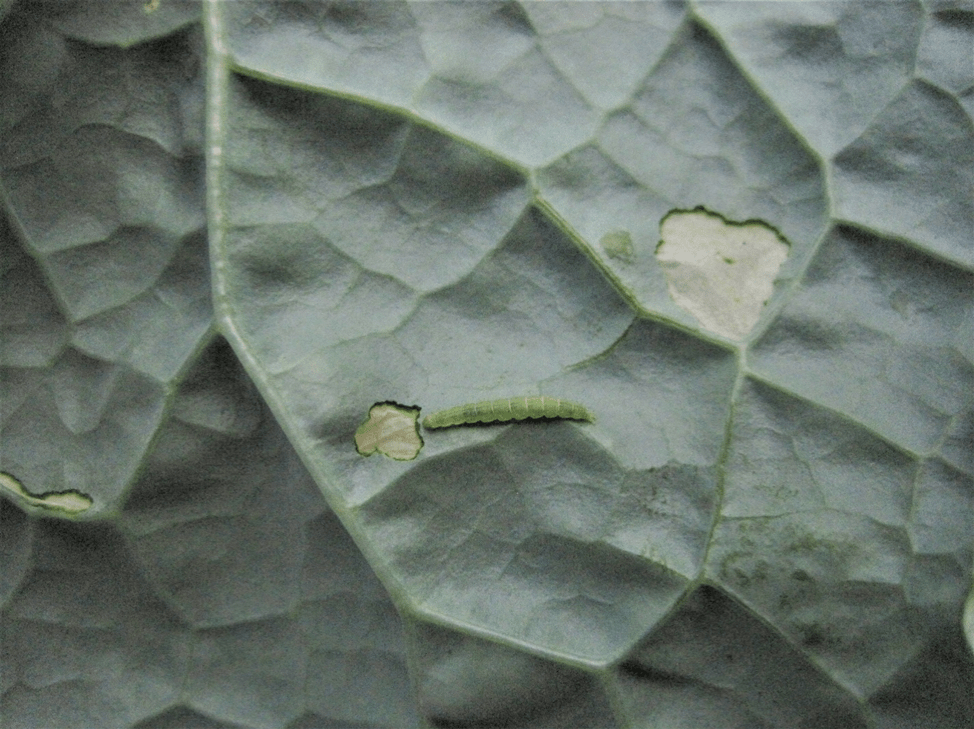
The Diamondback Moth (Plutella xylostella) is limited to feeding on plants in the Brassicaceae family, or more commonly known as the mustard family. This family includes many plants such as; canola, mustard, cabbage, cauliflower, broccoli, and kale. This family of plants are easily defined by having a sulfur – containing plants parts called glucosinolates, which are toxic to most insects, but the Diamondback Moth are known to rely on some of these plants parts for things like host detection, oviposition and breaking down the plant for food. Compounds in this family of plants, as well as toxic residues waxes, and factors that include the host plant nutrition quality, leaf morphology and leaf colour, or a mix of these, can possibly trigger behavioral changes to reproductive and feeding behavior of insects, including the Diamondback[n1] Moth. This is a major problem for farmers that use crops in this plant family, not only locally in Canada, but also internationally where large groups of farmers are effected. Though the pest was introduced in about 150 years ago it wasn’t a significant problem in North America until the 1950’s when their population grew. Through increased tolerance to insecticides, and the insecticides relative ineffectiveness the Diamondback Moth was deemed out of control in the 1980s. Alternative measure and a stronger focus was placed on parasitoids as a means of management. Known parasitoid that effects this species of moth comes from Western Canada, were parasitic wasp attack the moth, with the most noticeable being the Diadegma insulare, and the Microplitis plutellae. These two species of was often attack the Diamondback moth when it is in its larval stages. There is also a parstic wasp which often attacks in the pupal stages that being the Diadromus subtilicornis.
The host plants must certain conditions for the Diamondback Moth to most likely attack and be successful in doing so. This is especially important in Canola and Mustard Weed. The moth will does not usually target crops in the first stage of plant development, but will target as in the later stages. There are situations where they are likely to attack earlier. This often isn’t a good thing for the current crop due to the increased time for the Diamondback moth reproductive life cycle to take place, up to a maximum of 4, leading to a possible peak year. It is often the case that populations of the moth are hard to predict on previous year population. This is mostly attributed to Canadians cold harsh winters where very few if any of the pupae survive. This leads to variability of the severity year to year being dependent on factors in the south and winds that may transport the moths up to northern parts.
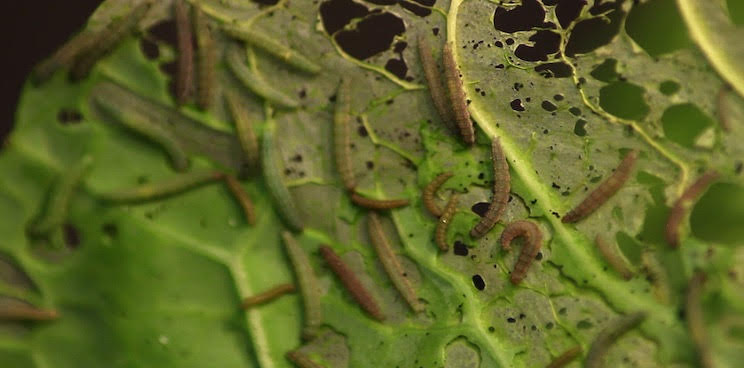
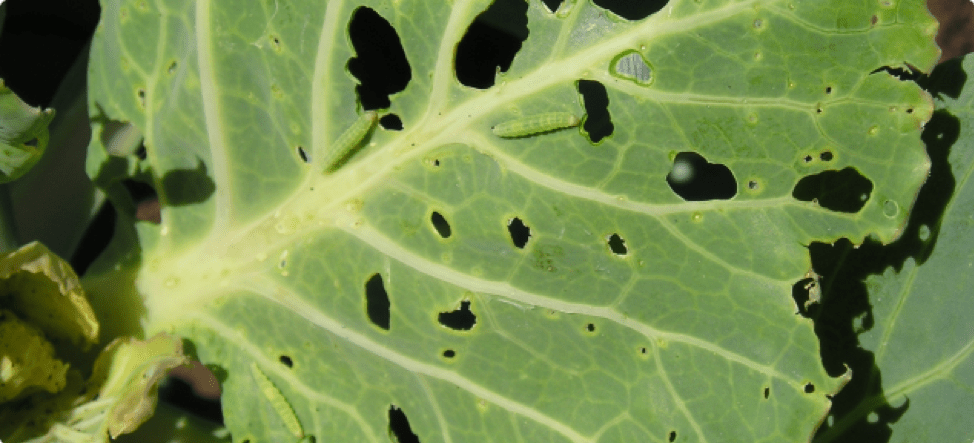
The Diamondback moth have 4 life stages, the egg, larval, pupal and adult. They attack mainly during the pupa and caterpillar stages of their life cycle. Reaching the larval stage the larvae borrow into the leaf, eating their leaf tissue, the mesophyll. With each instar stage the being to feed on the surface of the leaves, buds, flowers, and pods. When looking at produce on items such as broccoli, cabbage and cauliflower the first few stages of the caterpillars feeding cycle is spent digging deep into the head of the produce. As the diamondback moth goes through it subsequent life stages the focus shifts to the underside of the leaf and then dig even deeper. Once the moth reaches the adult stage and emerges as a fully formed moth they mostly feed on dew and water droplets, thus completely eliminating any further possible damage. When the moths are in the stages that cause the most damage it is quite obvious as the caterpillars create windows of damage that are called windows, which are often with an otherwise intact epidermis. To certain crop types they can cause severe damage / contamination on species such as; broccoli or cauliflower by pupating on it. In Canada’s vast Canola farms, the larvae stage causes the damage and will affect almost everything in the plant from the leaves to the buds, flowers, seed pods, stems and even the seeds within seed pods. They often eat everything leaving only the veins of the leaf. If given the right conditions the moth can cause millions in
economic damage to farmers. In the larva life stage they are easy to identify due to having a unique defense mechanism, which is that if the larva is disturbed it uses its silk as a rope to safely rappel off the plant. When put together the management of the Diamondback Moth is difficult to manage in its variety of stages of life. All this damage of the plant makes the early life stages of the Diamondback moth generally easy to spot, especially. As the lifecycle stages for the moth happen rapidly the evidence will appear on the crops quickly. A large healthy crop will be obvious due to the retention of its leafs until late in the season, and crops that have noticeable leaf loss then it is expected that following will be a fairly immediately and significant yield losses. Management when in season include scouting sweeps in the summer to catch an infestation before it’s too late to deal with insecticide. When scouting the crop, they often will look at the plants that are currently growing on ridges and knolls, this were the damage from this moth usually become first evident. When managing for pests it is important to keep in mind the importance of other plants and weeds to the survival of the Diamondback, because it needs to feed off something in the main crop’s off-season.
Introduced pests such as the Diamondback Moth will be an issue for the foreseeable future as they affect only food crops which have no natural defense mechanisms. Our careful management of our crops and a gradual improvement of integrated pest management efforts will be key in keeping the Diamondback population at bay for the foreseeable future and to prevent the largest peak years from occurring.
 classicdiamondback.school.blog